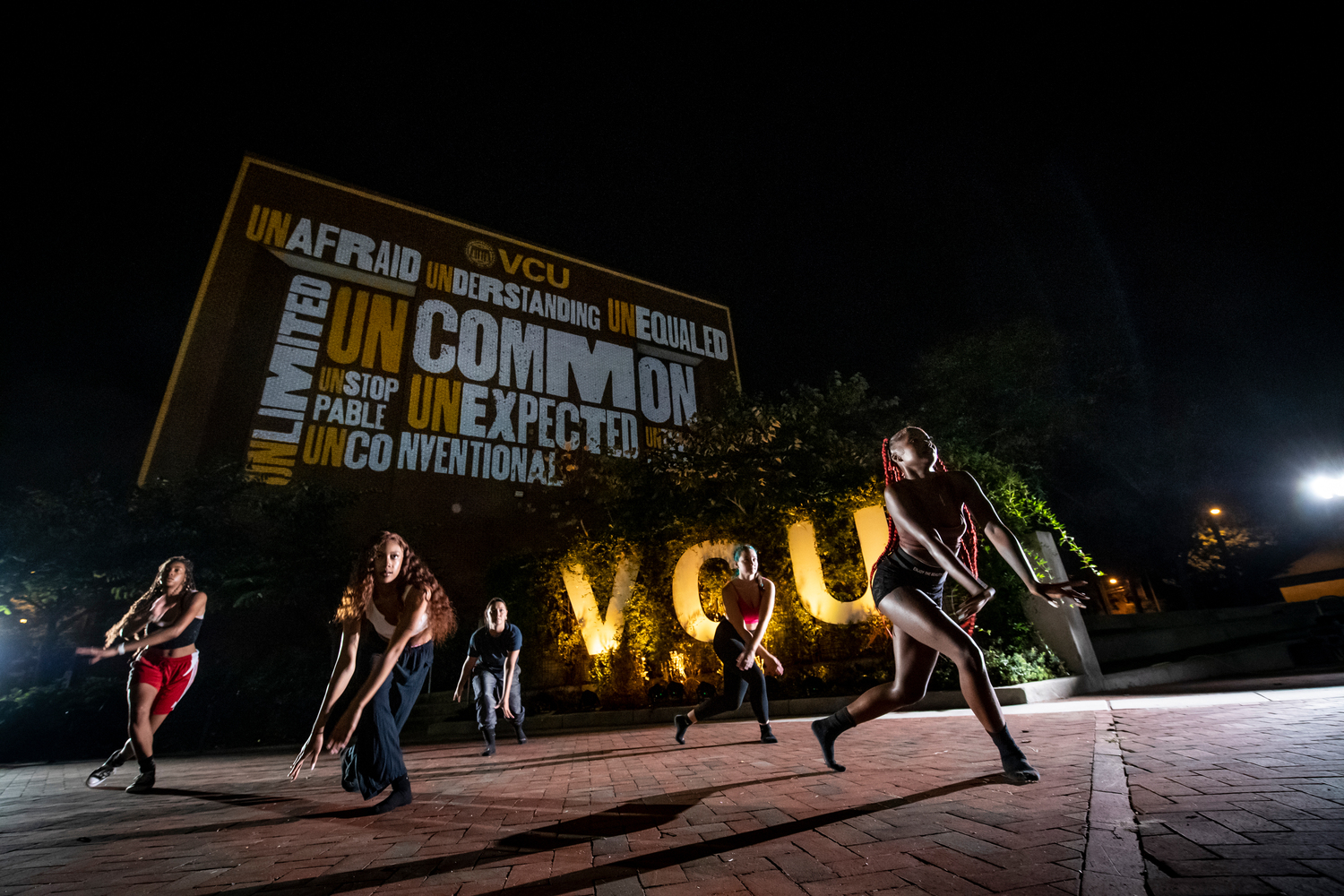
Ready to join a workforce UNLIKE any other?
VCUarts Adjunct Instructor - Department of Interior Design
- 45001265
- 907 Floyd Avenue, VCU Main Campus, Virginia, United States, 23284
- Academic and Faculty Affairs
- Adjunct
- School Of The Arts MBU
Position Responsibilities:
Virginia Commonwealth University School of the Arts (VCUarts) Department of Interior Design is recruiting a pool of applicants on an ongoing basis for adjunct teaching positions. The Department of Interior Design will consult the adjunct applicant pool and contact qualified applicants whose credentials match our specific teaching needs on an as-needed basis. Given these criteria, this pool will only be assessed when an adjunct opportunity arises.
Position Responsibilities:
Possible adjunct opportunities could include teaching a course(s) in any of the areas of study offered by the Department of Interior Design. A link to course descriptions from VCU's Undergraduate Bulletin can be found at https://bulletin.vcu.edu/azcourses/ides/.
Adjunct faculty are expected to be thoughtful and proactive members of the Interior Design community and have a desire to work with a student population in a collaborative and learning-centered collective of other adjunct instructors, students, faculty and staff.
If an adjunct opportunity arises, only those selected for an interview will be contacted.
Required Qualifications:
· Terminal degree (MFA) in a related field, or BFA with additional training and/or professional experience that equates and/or parallels the artistic development expected in a terminal degree holder.
· Appropriate teaching experience and/or strong oral presentation and communication skills.
· Demonstrated experience working in and fostering an environment of respect, professionalism and civility with a population of faculty, staff, and students from all backgrounds and experiences, or a commitment to do so as a faculty member at VCU.
Preferred Qualifications:
Demonstrated skills and experience in one or several of the following areas of expertise:
1) Design Studio – includes teaching students the development and process of design ideas and philosophies, design principles and elements, human factors and behavior, creative problem solving, research, survey and analysis, code requirements and project development. Teaching construction documents is a plus.
2) Ethics and Business for Interior Environments – able to address the professional and business practices as they relate to the interior design profession, including responsibilities, services, ethics, business and project management, and marketing.
3) Visual Communication in Design – includes use of manual and computer graphic techniques (using Adobe Creative Suite, Revit and rendering engines) to teach, among other topics: drafting, sketching, rendering, perspective drawing and model-making.
4) Design related lecture topics – topics covered in separate courses include design history, materials, lighting and color, construction, design foundations, and research methods design fundamentals.
NCIDQ certification preferred.
Application materials should include the following:
-Current CV or Resume
-A list of three current references including names, phone numbers, and email addresses (references will not be contacted prior to applicant’s approval)
-Portfolio of work (as applicable), visual documentation of professional work, and examples of student work, if available. If file size is problematic, include an accessible link that points to a website or cloud storage (with access instructions) to view all visual work.
Salary Range: VCUarts Standard Adjunct Per Credit Rate
FLSA Exemption Status: Exempt
FTE: Varies
Contact Information: VCUarts Human Resources, artshr@vcu.edu
Recommended for you
Assistant Director for Health Promotion
VCU Main Campus VCU Main CampusHourly Library Specialist
MCV Main Campus. VCU Main Campus MCV Main Campus. VCU Main CampusVNPC Public Health Data Research Analyst, SOM/Pediatrics
MCV Main Campus MCV Main CampusEEO
Virginia Commonwealth University is an equal opportunity employer.
VCU Notice of Nondiscrimination
Know Your Rights: Workplace Discrimination is Illegal
VCU's Pay Transparency Nondiscrimination Provision
Annual security and fire safety report
Virginia Commonwealth University (VCU) is committed to assisting all members of the community in providing for their own safety and security. As required by federal law (The Jeanne Clery Disclosure of Campus Security Policy and Campus Crime Statistics Act, 20 U.S.C.1092(f), known as the “Clery Act”), the university publishes an Annual Security and Fire Safety Report, which contains information regarding campus security, crime reporting policies, personal safety and crime prevention, and fire and crime statistics for our various campus locations. To request a paper copy of the current report, please contact the VCU Police Department by calling (804) 828-3851 or in person at 224 E. Broad St., Richmond, Virginia 23219.
E-verify Notice: After accepting employment, new hires are required to complete an I-9 form and present documentation of their identity and eligibility to work in the United States. Effective June 1, 2011, agencies in the Commonwealth of Virginia's Executive Branch will use the E-Verify system to confirm identity and work authorization.
If you have questions or need accommodations during the application and interview process, please contact VCU Human Resources at (804) 828-0177 (Voice), (800) 828-1120 (TDD) or askhr@vcu.edu. The HR Welcome Center on the corner of Belvidere Street and W. Franklin Street is open Monday through Friday 8:30 a.m. to 4:30 p.m.