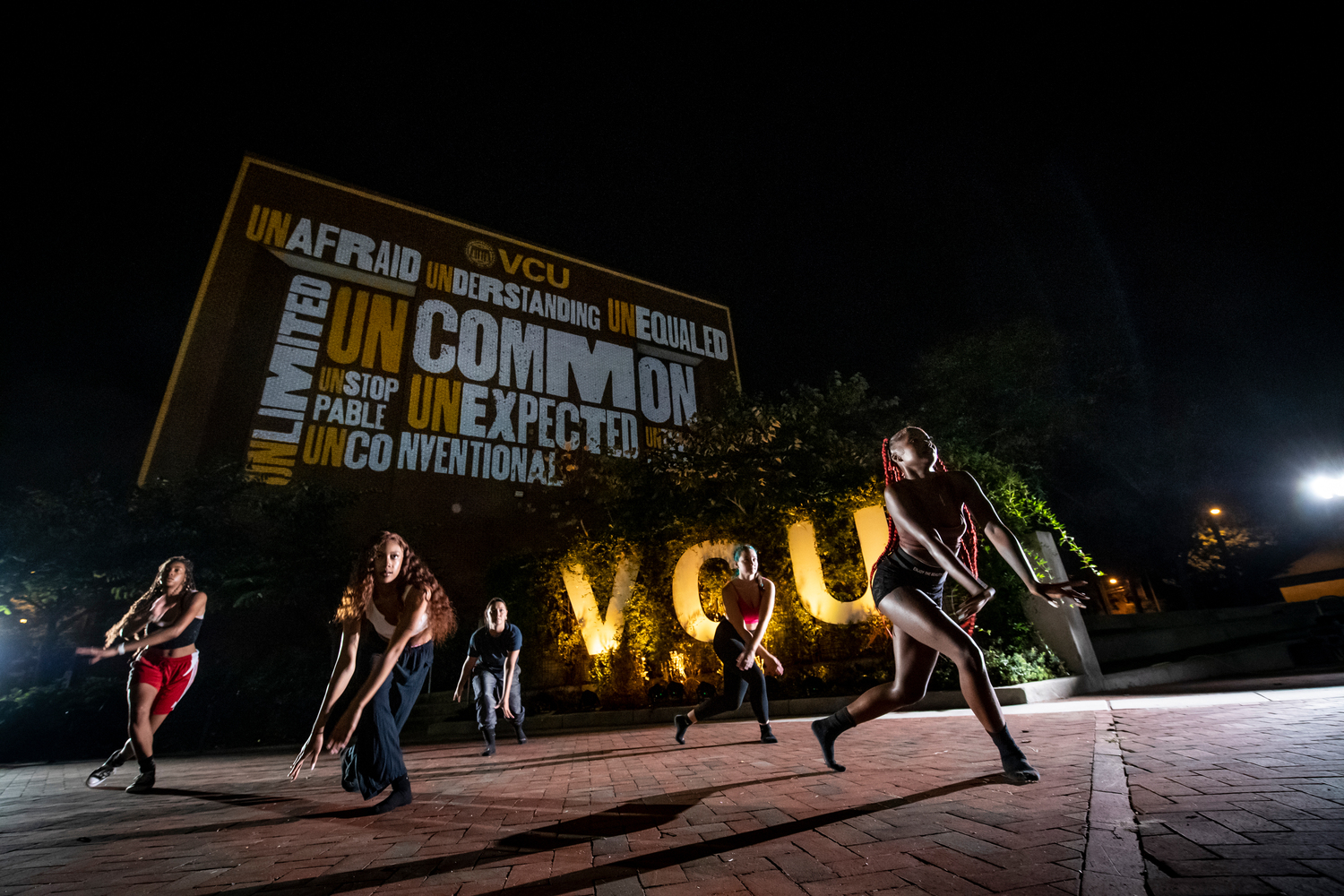
Ready to join a workforce UNLIKE any other?
Assistant Professor - Biomedical AI, Spatial Multi-Omics and Cancer Data Science, Department of Cellular, Molecular and Genetic Medicine
- 45002433
- 907 Floyd Avenue, MCV Main Campus, Virginia, United States, 23284
- Faculty
- Research
- Teaching & Research Faculty
- School Of Medicine MBU
Advertising Summary: Virginia Commonwealth University (VCU) School of Medicine is a premier academic medical center located in the heart of Richmond. Accounting for almost half of VCU’s sponsored research, the School of Medicine is internationally recognized for patient care and education. Virginia Commonwealth University is an equal opportunity employer.
Unit: School of Medicine
Department: Cellular, Molecular and Genetic Medicine
Department Summary: The Department of Cellular, Molecular and Genetic Medicine is dedicated to unraveling the fundamental biology that supports health and drives disease. Our faculty, trainees and students tackle some of the most pressing challenges in biomedical science, from the molecular and genetic roots of disease to the complexities of whole-body physiology.
Our foundational studies are driving the frontiers of scientific discovery, pushing the boundaries of what we understand about biology, disease and the human body. From our labs in downtown Richmond to research collaborations around the world, our work is generating new knowledge, influencing the direction of biological science and redefining what is possible in biomedical research.
We are proud to be a community of passionate educators and mentors, deeply committed to empowering the next generation of scientists and leaders. With alumni enjoying successful careers across a broad spectrum of industries, our rigorous training programs offer students a transformative education that drives innovation today and creates lasting impact for tomorrow.
Mission:
The Department of Cellular, Molecular and Genetic Medicine at Virginia Commonwealth University School of Medicine is committed to advancing molecular discovery, disease biology, and translational medicine through innovative research, education, and collaboration. The Division of Biomedical AI within CMGM is being developed to integrate artificial intelligence, machine learning, computational methods, and biomedical data infrastructure with molecular discovery and cancer research.
This position will support highly collaborative research across CMGM, Massey Comprehensive Cancer Center, the School of Medicine, and other VCU research programs. The goal is to strengthen collaborative cancer research through advanced spatial multi-omics analysis, scalable data systems, reproducible computational pipelines, AI-enabled research workflows, and cloud-based biomedical data infrastructure.
Chief Purpose of this Position:
The Department of Cellular, Molecular and Genetic Medicine seeks a full-time, 12-month, non-tenure-track Research Assistant Professor in Biomedical AI, Spatial Multi-Omics, and Cancer Data Science. This is a 100% research position focused on collaborative and team-based biomedical research, with particular emphasis on supporting cancer center projects and translational research programs.
The candidate will bring expertise in spatial multi-omics, database management, data curation and provenance, reproducible pipeline development, AI agent development, and cloud computing. The candidate will work closely with investigators across CMGM, Massey Comprehensive Cancer Center, and the broader School of Medicine to develop, implement, and maintain computational infrastructure for high-impact biomedical and cancer research.
Duties & Responsibilities:
Research: 100%
Contribute to collaborative biomedical and cancer research projects through the development and application of computational methods, data infrastructure, and AI-enabled research workflows.
Responsibilities include developing and maintaining reproducible pipelines for spatial transcriptomics, spatial proteomics, single-cell multi-omics, imaging, and related biomedical data types; designing data management systems that support data curation, metadata tracking, provenance, quality control, and reproducibility; supporting database development and integration for large-scale cancer and molecular medicine datasets; and implementing cloud-based computing workflows for scalable analysis and collaboration.
The candidate will also contribute to AI-enabled research infrastructure, including AI agents for data analysis, workflow automation, documentation, quality control, and reproducible biomedical discovery. The successful candidate will collaborate with faculty, clinicians, trainees, and research staff; contribute to manuscripts, grant applications, presentations, and reports; and help ensure that computational workflows are rigorous, transparent, scalable, and reusable across collaborative research programs.
Qualifications:
Minimum Qualifications
- PhD or equivalent degree in bioinformatics, computational biology, biomedical data science, computer science, biostatistics, statistics, engineering, genomics, cancer biology, or a related field
- Demonstrated expertise in computational analysis of biomedical data, with experience in one or more areas such as spatial omics, single-cell analysis, multi-omics integration, cancer data science, biomedical AI, or translational bioinformatics
- Experience developing reproducible computational pipelines using programming languages such as Python, R, Nextflow, Snakemake, or related tools
- Experience with database management, data organization, metadata standards, data curation, quality control, and/or data provenance
- Demonstrated ability to work effectively in highly collaborative, multidisciplinary biomedical research teams
- Strong communication skills and ability to work with basic scientists, clinicians, computational scientists, trainees, and research staff
- Demonstrated ability to work in and foster an environment of respect, professionalism, and civility with a population of faculty, staff, and students from all backgrounds and experiences, or a commitment to do so as a faculty member at VCU
Preferred Qualifications
The candidate will have expertise in one or more of the following areas:
- Spatial transcriptomics, spatial proteomics, imaging-based spatial biology, single-cell genomics, or multimodal spatial multi-omics
- Cancer data science, tumor microenvironment analysis, cancer ecosystem modeling, immune-tumor interaction analysis, therapeutic response studies, or translational cancer research
- Development of scalable and reproducible pipelines for high-dimensional biomedical data analysis
- Database design, biomedical data models, metadata frameworks, data provenance, data harmonization, and long-term data stewardship
- Cloud computing and high-performance computing environments, including platforms such as Google Cloud, AWS, Azure, or institutional HPC systems
- AI agent development, workflow automation, LLM-enabled research tools, automated data analysis systems, or AI-assisted documentation and quality control
- Software engineering practices, version control, containerization, workflow management, API development, and collaborative code development
- Experience contributing to collaborative grant applications, manuscripts, cancer center research programs, shared resources, or team science initiatives
Application Materials:
Applicants should submit a curriculum vitae, a brief research and technical expertise statement, a collaborative research statement, and names of references. Review of applications will begin immediately and continue until the position is filled.
A competitive startup and research support package will be provided to help the successful candidate develop collaborative biomedical AI, spatial multi-omics, and cancer data science infrastructure.
Salary Range: Commensurate
Benefits: All full-time university staff are eligible for VCU's robust benefits package, that includes comprehensive health benefits, paid annual and holiday leave, generous tuition benefits, retirement planning and savings options, tax-deferred annuity and cash match programs, employee discounts, well-being resources, abundant opportunities for career development and advancement, and more.
FLSA Exemption Status: Exempt
Sensitive Position: No
Restricted Position: No
ORP Eligible: Yes
Flexible Work Arrangement: Other
Rank: Assistant Professor
Tenure: Ineligible
Months: 12 months
Contact Email: SOMHR@vcuhealth.org
Recommended for you
Institute for Contemporary Art Community Media Center Coordinator
MCV Main Campus MCV Main CampusAssistant Professor - Division of Biomedical AI, Cellular, Molecular and Genetic Medicine
MCV Main Campus MCV Main CampusDepartment of Art History - Adjunct instructor - VCUarts Qatar
Qatar QatarEEO
Virginia Commonwealth University is an equal opportunity employer.
VCU Notice of Nondiscrimination
Know Your Rights: Workplace Discrimination is Illegal
VCU's Pay Transparency Nondiscrimination Provision
Annual security and fire safety report
Virginia Commonwealth University (VCU) is committed to assisting all members of the community in providing for their own safety and security. As required by federal law (The Jeanne Clery Disclosure of Campus Security Policy and Campus Crime Statistics Act, 20 U.S.C.1092(f), known as the “Clery Act”), the university publishes an Annual Security and Fire Safety Report, which contains information regarding campus security, crime reporting policies, personal safety and crime prevention, and fire and crime statistics for our various campus locations. To request a paper copy of the current report, please contact the VCU Police Department by calling (804) 828-3851 or in person at 224 E. Broad St., Richmond, Virginia 23219.
E-verify Notice: After accepting employment, new hires are required to complete an I-9 form and present documentation of their identity and eligibility to work in the United States. Effective June 1, 2011, agencies in the Commonwealth of Virginia's Executive Branch will use the E-Verify system to confirm identity and work authorization.
If you have questions or need accommodations during the application and interview process, please contact VCU Human Resources at (804) 828-0177 (Voice), (800) 828-1120 (TDD) or askhr@vcu.edu. The HR Welcome Center on the corner of Belvidere Street and W. Franklin Street is open Monday through Friday 8:30 a.m. to 4:30 p.m.